Coffee Clubbing: How South Africa's Cafés Became the New Nightclubs
A sober-curious generation is trading 2am dance floors for 10am flat whites — and specialty cafés from Cape Town to Johannesburg are rewriting what social nightlife looks like in daylight.
Key Takeaways
- Coffee clubbing didn't start here, but it lands naturally in South Africa.
- The signals are scattered but consistent.
- Coffee clubbing isn't a novelty — it's a distribution channel for community.
- Coffee clubbing is a daytime social format that swaps alcohol and late-night club venues for specialty coffee, DJs and community-first café spaces.
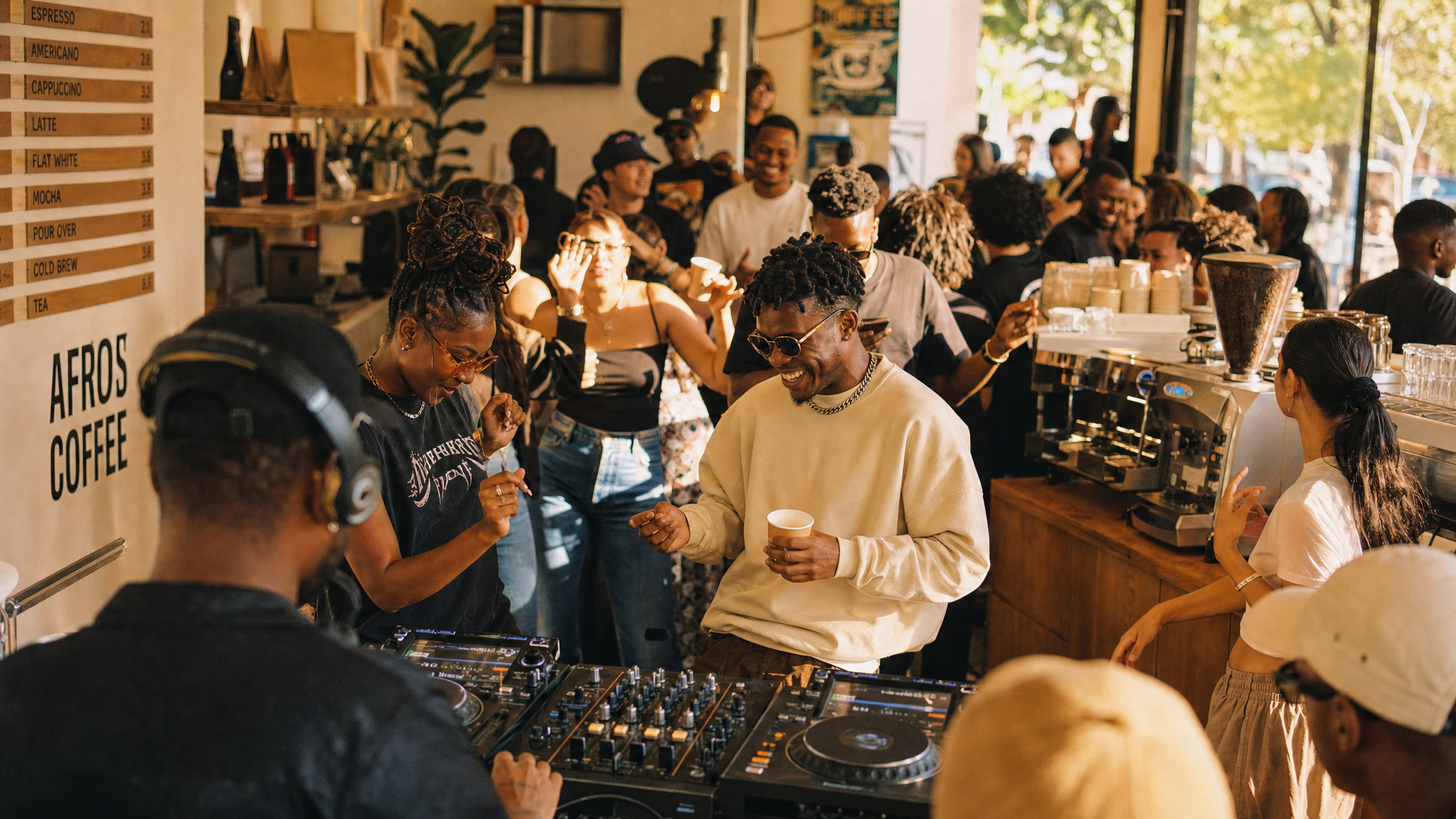
The dance floor has moved. Where South African social life once began at 11pm and ended in a queue for an Uber home, a growing share of the country's under-35s are meeting at 10am for a flat white, a run and a DJ set that wraps before lunch. It's called coffee clubbing — sometimes coffee raving or soft clubbing — and it's the fastest-growing category on the global daytime-social circuit.
Eventbrite's 2026 trend data shows coffee-clubbing events up 478% year-on-year, with morning raves up 20% and wellness-adjacent formats (sauna sessions, ice-bath socials, run-club-and-brew crossovers) up 256%. In South Africa the shift is quieter but unmistakable: specialty roasters are programming DJs, run clubs are anchoring at cafés, and Meetup calendars in Johannesburg and Cape Town are filling with sober-friendly Saturday-morning gatherings.
"For a generation that drinks less and wants more socially, the club is no longer the main vehicle for community."
Why the Shift Is Happening Now
Three forces are colliding.
First, health. Gen Z and younger millennials are the most sober-curious cohorts on record, prioritising sleep, mental clarity and a productive Monday.
Second, time. Daytime formats let people stack a workout, a social gathering and dinner plans into a single Saturday without losing the weekend to a hangover.
Third, economics. For South African café owners squeezed by rising rent and softer weekday trade, a ticketed 10am-to-1pm event turns a dead zone into a revenue engine — without the licensing overhead of late-night service.
A Local Take on a Global Format
Coffee clubbing didn't start here, but it lands naturally in South Africa.
Melbourne's MP3 Social first codified the format — free-flow specialty coffee, a rotating DJ, a 2pm start — and it has since surfaced in Berlin (Good Daze), London (Rant & Ramble at The Folly), Liverpool (Arts Bar Baltic's 5k-plus-coffee-rave), Amsterdam, Buenos Aires and Bangkok.
The South African version is being shaped by three existing strengths: a mature specialty-coffee scene, an unusually strong run-club culture, and a nation that already treats the café as a community hub rather than a transaction counter.
Where It's Already Happening
The signals are scattered but consistent.
Johannesburg's 44 Stanley precinct, Father Coffee in Kramerville, and Melville's independent café strip are hosting weekend DJ programming and community brunch clubs.
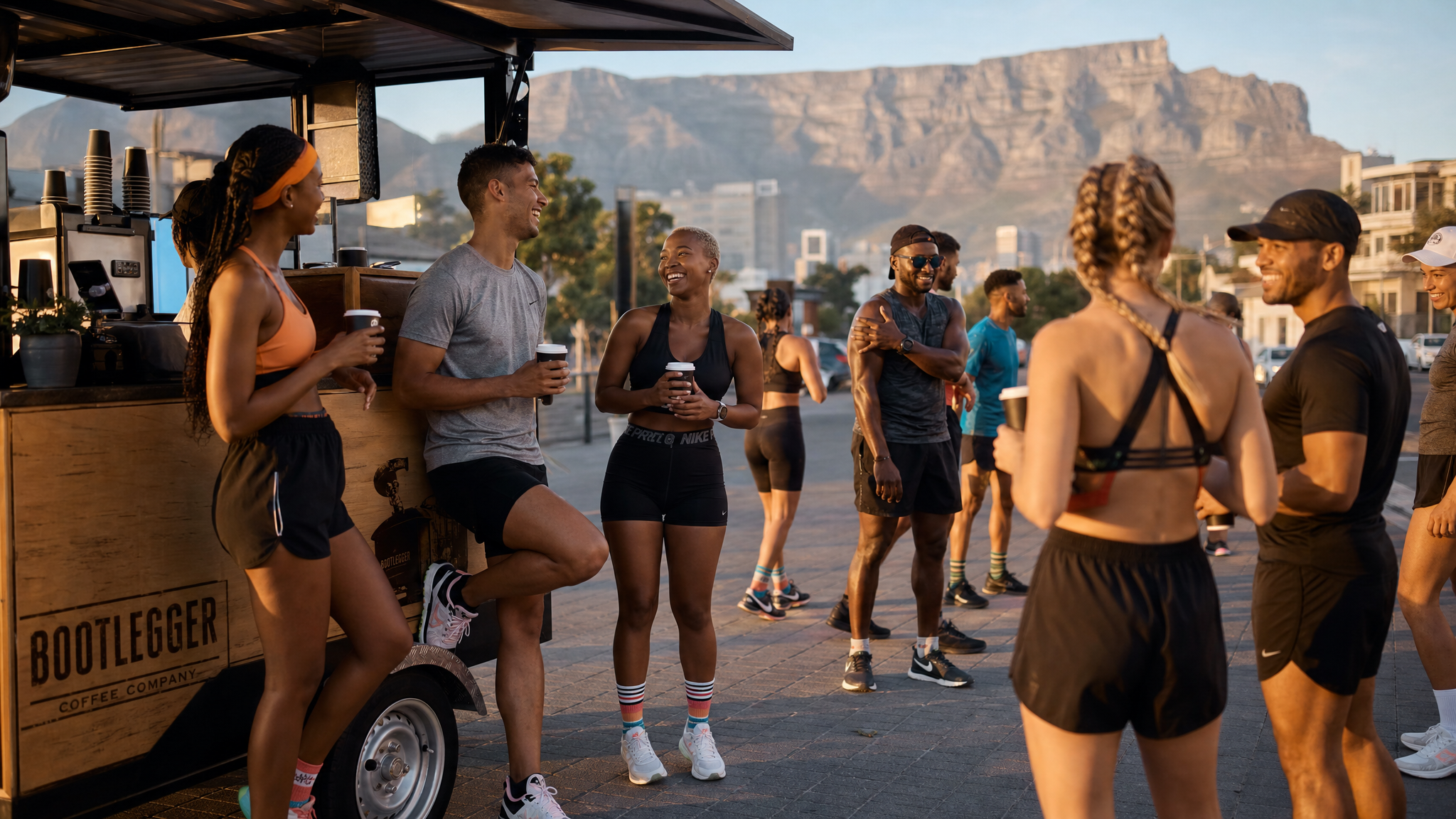
Cape Town's Woodstock and De Waterkant coffee corridors — Origin, Truth, Rosetta, Bootlegger — sit inside walking distance of the parkrun and Sea Point Promenade run-club routes, making the run-then-rave combo effortless.
Pretoria and the KZN Midlands are catching up through roaster-led experiences like Bluebird and the Perfect Blend Festival at Topdose Roastery.
The Three Formats to Know
- Coffee Rave. A ticketed 2- to 3-hour daytime party inside a café or roastery. DJ, specialty coffee included in the ticket, no alcohol required. Typical spend: R120–R250. Vibe: quiet dance floor, loud espresso machine.
- Run & Brew. Meet at 8am, run 5km along a scenic route (Sea Point, Delta Park, the Braamfontein Spruit), return to a café where the DJ is already playing and the flat white is already pulled. Sweat to Social's template, localised.
- Sober Social Club. Membership-style monthly gatherings — think Conscious Connections Johannesburg or Fun Seekers' Coffee & Brunch Club — where the format is conversation, not consumption.
What This Means for Cafés, Brands and Community Builders
Coffee clubbing isn't a novelty — it's a distribution channel for community. For SA café operators, service brands and lifestyle marketers, the format is a low-lift way to capture a wellness-oriented, high-spend audience that is deliberately underserved by traditional nightlife.
For café owners
Programme one recurring event per month before scaling. Pair with an existing community — a local run club, a cycling group, a book club — rather than building audience from zero. Ticket at R120–R180 including a signature drink. Cap at 60–120 guests to keep it intimate and to protect your daytime trade. Sell it as a series, not a one-off, so search intent and Instagram algorithm both compound.
For brands and marketers
Coffee clubbing audiences are premium: they buy specialty beans, oat milk, sneakers, wellness supplements, wearables and travel. Sponsorship works best when it's functional — milk alternatives, portable speakers, run-tracking apps, non-alcoholic aperitifs — not logo-slap activations. Local case study: MILKLAB's Coffee Rave series quietly built one of the most talked-about barista-adjacent brands in Asia by attaching the brand to the format itself.
The Key Takeaway
The coffee shop is quietly becoming South Africa's most important third space — not because we drink more coffee, but because we've found new reasons to gather around it. Brands, cafés and creators who treat the café as a stage rather than a service counter will own the next five years of daytime culture.
Frequently Asked Questions
What exactly is coffee clubbing?
Coffee clubbing is a daytime social format that swaps alcohol and late-night club venues for specialty coffee, DJs and community-first café spaces. It typically runs from mid-morning to early afternoon and is alcohol-optional rather than alcohol-free.
Is coffee clubbing popular in South Africa yet?
It's early but growing fast. Specialty coffee hubs in Johannesburg, Cape Town, Pretoria and the KZN Midlands are hosting DJ-led weekend programming, run-club crossovers and sober social meetups — mirroring a global trend that Eventbrite reports grew 478% in the past year.
Where can I go to a coffee rave in South Africa?
Watch programming from Father Coffee (Johannesburg), 44 Stanley precinct venues, Bootlegger and Truth Coffee (Cape Town), Bluebird Roastery (KZN Midlands) and Topdose Roastery at 4Ways Farmers Market. Meetup groups such as Conscious Connections Johannesburg also host sober-friendly weekend events.
Why is this trend growing?
Three drivers: a sober-curious younger generation, a desire to protect weekends and mental health, and café operators looking for daytime revenue that doesn't require a late-night liquor licence.
Sources
- National Geographic — "Rave new world: why travelers are flocking to unique party spaces", June 2026
- USA Today — "Forget night clubs. Morning raves are where it's at.", June 2026
- Meetup — Conscious Connections Johannesburg & The Coffee & Brunch Club events, 2026
- Bagua HK — "Hong Kong's Gen Z Is Rewriting Party Culture: Sober-Curious Days, Coffee Raves", June 2026
- The Guide Liverpool — "Arts Bar launches morning Coffee Rave and 5k run in Liverpool", June 2026
- Time Out Johannesburg — "Warm drinks worth leaving the suburbs for", June 2026
- Proper Coffee — Specialty coffee guide, Woodstock, Cape Town, 2026
- 4Ways Farmers Market — The Perfect Blend Festival at Topdose Roastery, July 2026
- Time Out Bangkok — "Caffeinate your Saturday at MILKLAB's free coffee rave", June 2026
Keep Reading
If this resonated — go read Coffee Raves Are Up 478% — And This Ex-DJ Wants In. That's the personal take. Twenty years behind the decks, and the sober daytime party is the most exciting thing to happen to dance music.
Want DJ Bibi at your next coffee rave? Whether it's a roastery launch, a run-club after-party or a Saturday-morning session — I'll bring the decks, the vibes and 20 years of reading crowds. Freebie in kind or a bag of your finest beans? I'm in. Give me a shout:
- YouTube: DJ Bibi on YouTube
- SoundCloud: Bibi Burness on SoundCloud
Bibi Burness is the founder of Coffee Journal, a 20-year DJ veteran and events producer based in South Africa. He believes the best beats always hit harder with a flat white in hand.
About the author
Bibi Burness, founder of Coffee Journal, has profiled 50+ SA specialty roasters and tested 10+ bottled water brands against the SCA standard. He completed the Bean There and Bluebird one-day home-barista courses in 2026 and maintains the site's transparency trust-score system.
Read more on the About page →