Plunger Coffee: The Right Ratio, Grind & Method (SA Guide 2026)
Every SA household owns a plunger. Almost nobody uses it right. The correct coffee-to-water ratio, grind size, and the one step that eliminates sludge forever.
Key Takeaways
- Ratio: 1:16 or ~2 heaped tablespoons per cup if you refuse to buy a scale.
- Kettle on gas + plunger = zero-electricity coffee for a family of four in one press.
Plunger Coffee Done Right: You've Been Using It Wrong Since the 90s
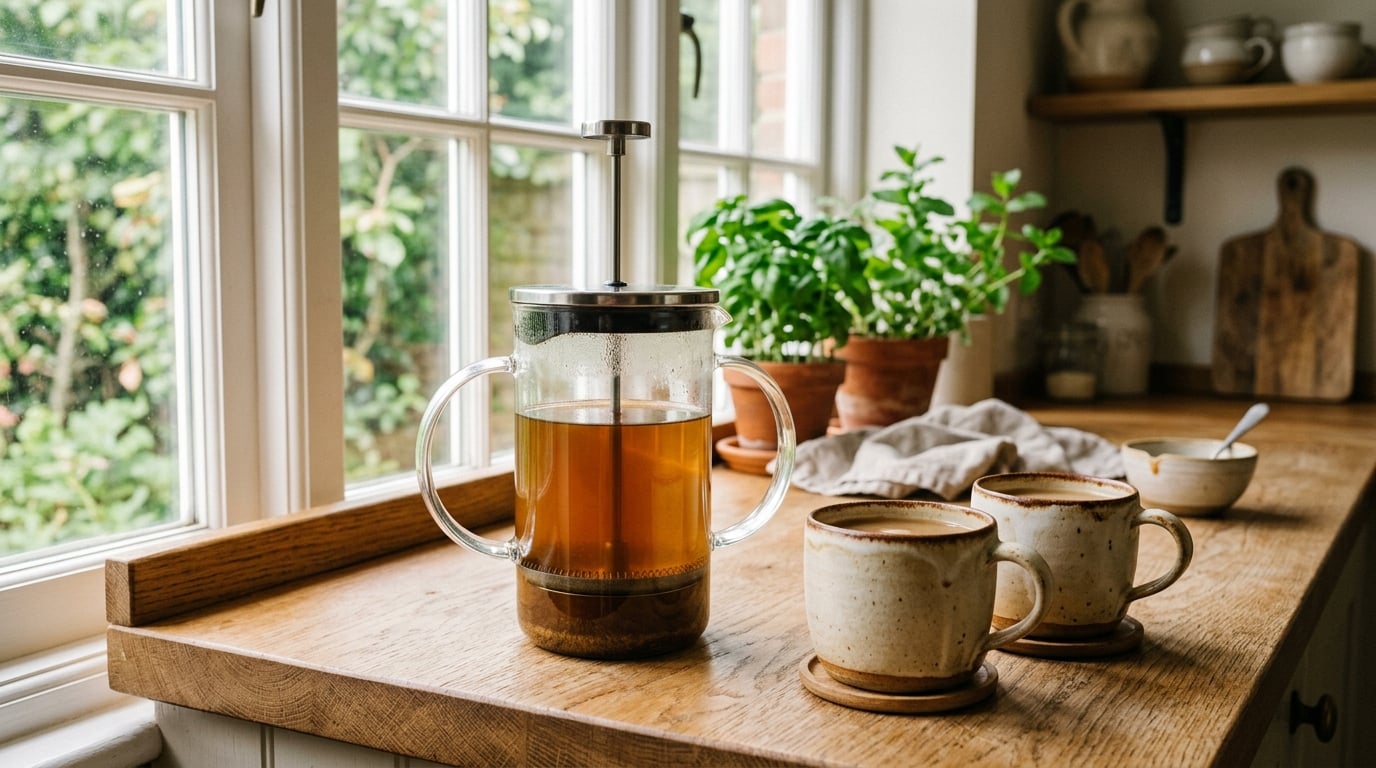
Every South African home has a plunger. It lives in the cupboard next to the fondue set, comes out when guests stay over, and produces something muddy, bitter and slightly gritty that everyone politely drinks. Here's the thing: the plunger — the French press, if you're fancy — is genuinely one of the best brewers ever made. The recipe your household inherited is just wrong.
Three fixes: the ratio, the grind, and one step at the end that nobody does.
What You Need
- Any plunger — the R199 one works as well as the R1,299 one, which is a rare and beautiful thing in coffee
- 30g coffee, coarse grind — like sea salt flakes, not sand. This alone fixes half your problems.
- 500g water, 90–94°C (30–45 seconds off the boil)
- Scale and timer
Pre-ground supermarket coffee is ground for filter machines — too fine for a plunger, and it's why yours is sludgy. Either ask your roaster to grind coarse for plunger, or better, grind at home. Settings in the Grind Guide.
The Recipe
Ratio: 1:16 or ~2 heaped tablespoons per cup if you refuse to buy a scale. Buy the scale.
- Preheat the plunger with hot water, then dump it.
- 30g coffee in, start the timer, pour all 500g of water in 30 seconds. Make sure everything's wet.
- Lid on, plunger UP. Walk away for 4 minutes. Don't stir, don't fiddle, don't plunge halfway "to check."
- At 4:00 — the step that changes everything: take two spoons, break the crust of grounds on top, and scoop the floating foam and grounds off. Ten seconds of work. This removes the bitter sludge factory before it sinks.
- Wait until 8:00 total, then press slowly — just to the surface of the liquid, not crushing the grounds into the bottom.
- Pour every cup immediately. Coffee left sitting on grounds keeps extracting into bitterness. If you're not drinking it all, decant into a flask.
Why Your Plunger Coffee Was Bitter
It was never the plunger. It was: too-fine grind (sludge), boiling water (scorch), five-minute steep with a hard plunge (silt storm), and then leaving the rest to stew on the grounds while you drank the first cup. Fix the grind and the decanting and you're 90% there.
Which Beans
The plunger is a full-body brewer — it lets oils through that paper filters catch. Chocolatey, nutty, medium-to-dark roasts absolutely sing in it. This is the brewer where SA's classic blends and comfort roasts belong; save the delicate anaerobic stuff for the AeroPress. My current picks are in this month's Top 5.
Load Shedding Note
Kettle on gas + plunger = zero-electricity coffee for a family of four in one press. For single servings on the go, the AeroPress wins on portability, but for brewing volume in the dark, the plunger is still the house champion.
FAQ
What's the correct plunger coffee ratio?
1:16 — 30g coffee to 500g water. Scale it: 60g per litre.
How long should plunger coffee steep?
4 minutes, break and skim the crust, then rest to 8 minutes total before a slow press. Longer, gentler, and skimmed beats the old "5 minutes and slam."
Why is my plunger coffee gritty?
Grind's too fine, and you're plunging too hard. Coarse grind, gentle press, stop above the grounds.
Is plunger coffee stronger than filter?
It's heavier-bodied because the oils stay in, which reads as "stronger." Caffeine-wise it's similar — strength is your ratio, not your brewer.

About the author
Bibi Burness, founder of Coffee Journal, has profiled 50+ SA specialty roasters and tested 10+ bottled water brands against the SCA standard. He completed the Bean There and Bluebird one-day home-barista courses in 2026 and maintains the site's transparency trust-score system.
Read more on the About page →