Flat White at Home: The Complete SA Guide (2026)
Café-quality flat white at home — the exact ratio, milk texturing technique, and three setups from R1,500 to R10,000 that actually work. Written and tested in SA.
Key Takeaways
- R1,500 — The Honest Hack: AeroPress concentrate + a handheld milk frother or French press plunged milk.
- What's the difference between a flat white and a latte?
How to Make a Flat White at Home (Without a R80,000 Machine)
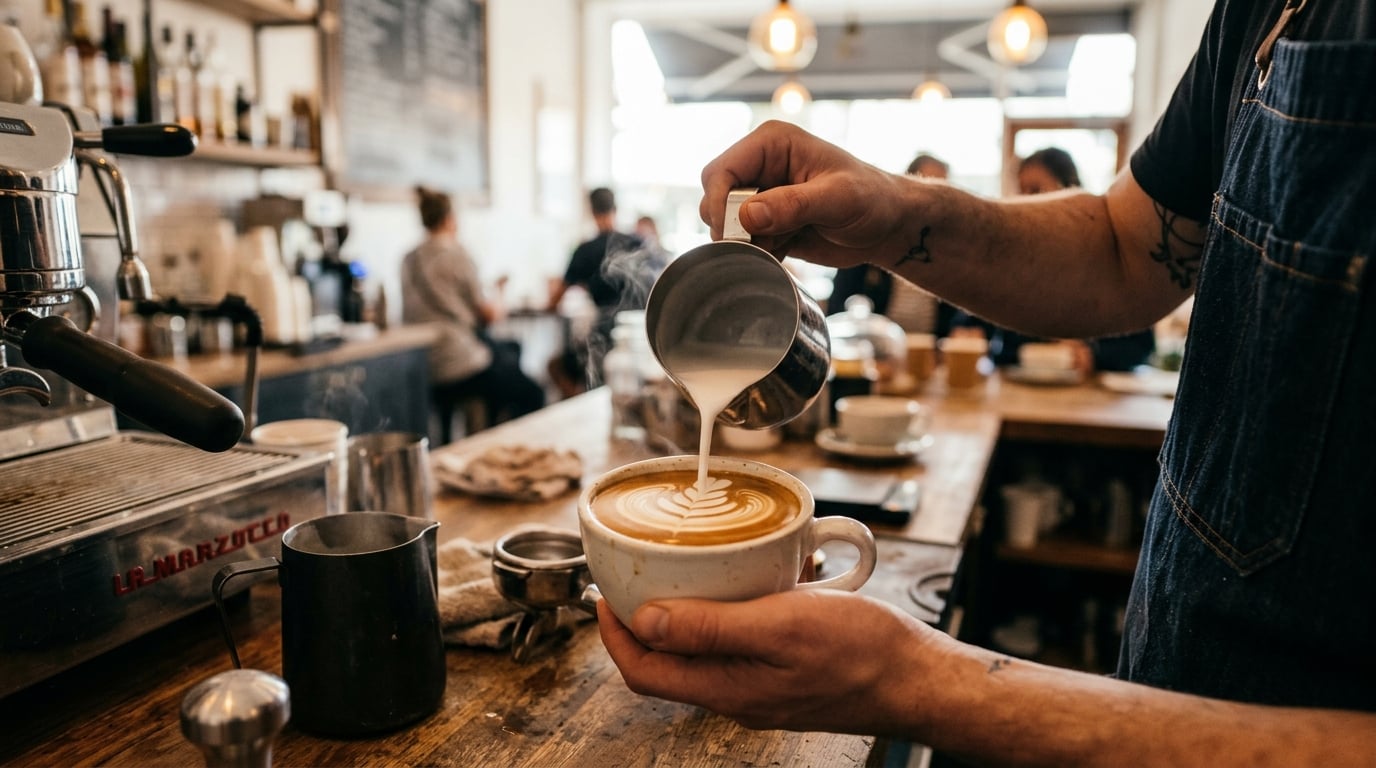
The flat white is South Africa's default coffee order, and it's also the drink cafés most consistently get wrong — so let's be honest, making a better one at home is not a high bar. At R38–R48 a cup, your daily flat white habit costs you north of R1,200 a month. The machine pays for itself before winter's out.
Here's what a flat white actually is, and three ways to make one at home depending on your budget.
What a Flat White Actually Is
Double shot of espresso, 120–160ml of steamed milk with microfoam — that's foam you can't see, just milk that turned to wet paint. Smaller and stronger than a latte, silkier than a cappuccino. The whole game is milk texture. Anyone can pull a shot; the microfoam is where home baristas are separated from people who own espresso machines.
Ratio: 1 part espresso to 3 parts milk. A 60ml double into a 180ml cup. Done.
The Espresso Part
- 18g of coffee in, 36g of espresso out, in 25–30 seconds. That's the starting recipe for almost any bean.
- Fresh beans, 7–21 days off roast. The roast date matters more than the machine. (My monthly Top 5 is the shopping list.)
- Sour = grind finer. Bitter = grind coarser. One change at a time. The full walkthrough with video is in the Dial-In Guide.
The Milk Part (The Actual Skill)
Full cream milk. Cold. Fill the jug to just below the spout's base.
- Stretch (first 3 seconds): steam tip just under the surface — you want a gentle tss-tss-tss paper-tearing sound. This adds air. Three seconds only. The number one home mistake is stretching the whole time and building a bubble bath.
- Spin (the rest): sink the tip slightly, angle the jug so the milk whirlpools. This spins the big bubbles into microfoam.
- Stop at 60–65°C — when the jug's base is just too hot to hold. Past 68°C you've scalded it, and no amount of latte art saves scalded milk.
- Groom: tap the jug, swirl until it's glossy. Paint, not foam.
- Pour: start high and thin into the centre, finish low and fast. Art is optional. Texture is not.
Three Home Setups That Work in SA
R1,500 — The Honest Hack: AeroPress concentrate + a handheld milk frother or French press plunged milk. Is it a real flat white? No. Is it 80% of one for 15% of the price? Yes.
R5,000–R7,000 — The Sweet Spot: entry espresso machine + separate burr grinder. Never spend it all on the machine and grind with blades — a good grinder with a modest machine beats the reverse every day of the week.
R8,000–R12,000 — The Endgame Starter: the setups where home flat whites stop being "good for home-made."
FAQ
What's the difference between a flat white and a latte?
Size and strength. Flat white: double shot, ±160ml milk, thin microfoam. Latte: usually single shot in SA, 220ml+ milk, thicker foam. The flat white tastes like coffee; the latte tastes like milk that met coffee once.
Can I make a flat white without an espresso machine?
A proper one, no. A very drinkable imitation with AeroPress concentrate or a moka pot, absolutely — the R1,500 setup above.
What milk froths best?
Full cream, the freshest you can get. For plant milks, oat "barista editions" texture best; regular oat and almond collapse.
What temperature should flat white milk be?
60–65°C. Too hot to sip immediately is too hot, full stop.

About the author
Bibi Burness, founder of Coffee Journal, has profiled 50+ SA specialty roasters and tested 10+ bottled water brands against the SCA standard. He completed the Bean There and Bluebird one-day home-barista courses in 2026 and maintains the site's transparency trust-score system.
Read more on the About page →