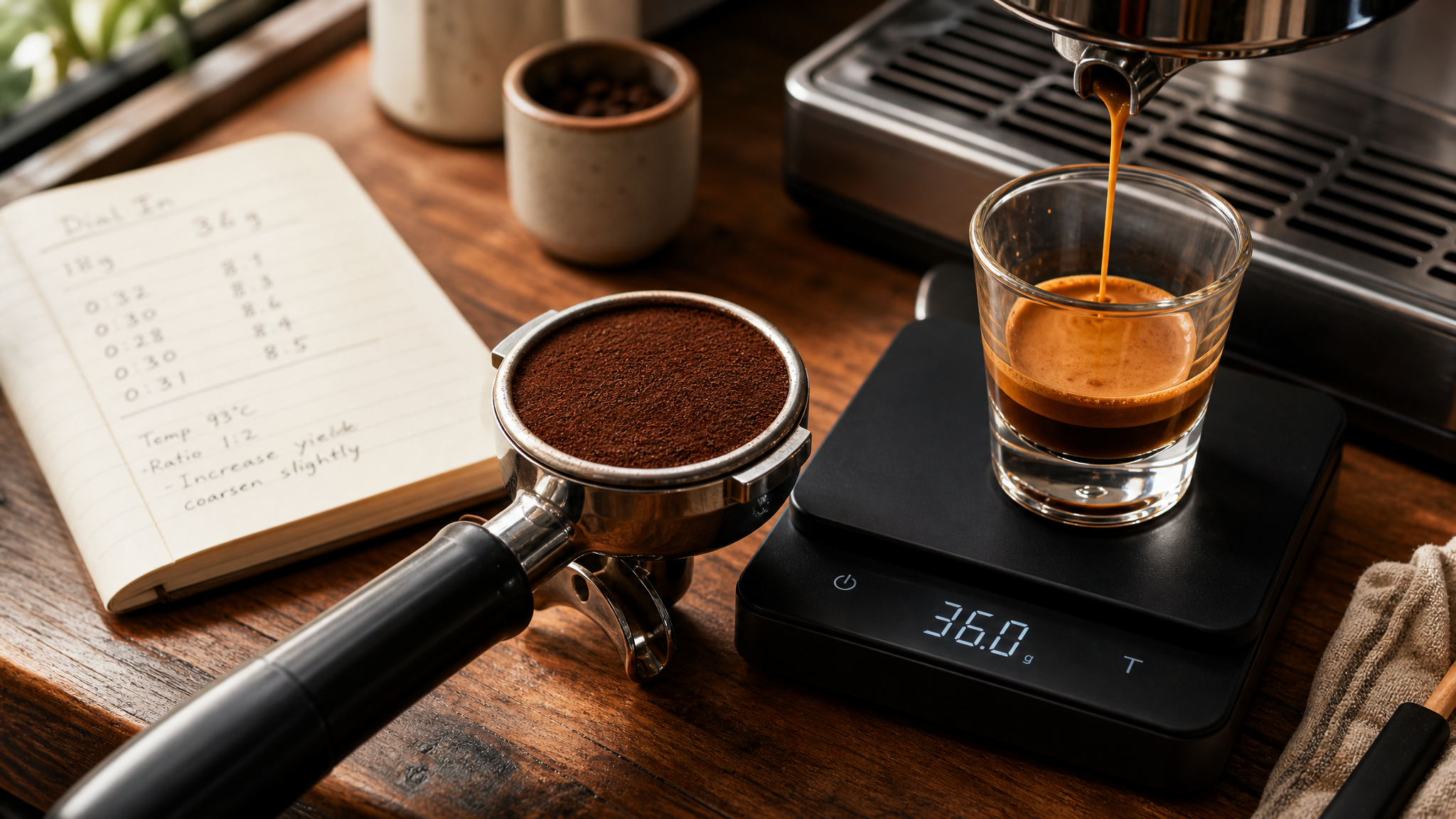
I’m still learning to pull a clean shot. Most days I get it wrong before I get it right — sour one morning, bitter the next, occasionally something that actually tastes like the roaster promised. This page is the framework I lean on, pulled from the Bean There course in Joburg and refined against my own kitchen failures.
If your shot tastes off, scroll to the table. It’ll tell you what your espresso is trying to say.
The three variables
Before the diagnostics make sense, you need three words:
Dose
Weight of dry ground coffee going into the basket (grams).
Yield
Weight of liquid espresso coming out (grams, not millilitres — buy a scale).
Time
Seconds from the moment you hit the button to the moment you stop the shot.
That’s it. Dose in, yield out, time on the clock. Every dial-in conversation in the world is about those three numbers.
The target
This is your starting point, not your finish line. Most modern third-wave roasts pull beautifully somewhere inside this window. If you’re new, start at 18 g in, 36 g out, 25 seconds and adjust from there.
The three shot profiles
What your espresso is telling you
Rich, clean, no bitterness, sweet finish
Heavy, sharp, lacks sweetness, short finish
Watery, thin, lacks balance, bitter finish
| Profile | Dose | Yield | Time | Ratio | What it tastes like |
|---|---|---|---|---|---|
| Just right | 18 g | 36 g | 25 s | 1 : 2 | Rich, clean, no bitterness, sweet finish |
| Sour / under-extracted | 18 g | 28 g | 25 s | 1 : 1.55 | Heavy, sharp, lacks sweetness, short finish |
| Bitter / over-extracted | 18 g | 45 g | 25 s | 1 : 2.5 | Watery, thin, lacks balance, bitter finish |
Sour means water didn’t pull enough flavour out of the puck. Bitter means it pulled too much. Both are fixable.
The troubleshooter
Golden rule: Only adjust one variable at a time. Change grind or dose, pull another shot, taste it, then decide. If you change both at once you’ll never know which fix actually worked.
Need help finding the right grind size for your grinder? Grind Size Guide
My honest caveat
The 1:2 ratio is a great default but it’s not gospel. Lighter, more modern roasts — the kind a lot of SA specialty roasters are putting out — often want a longer ratio (1:2.5 or even 1:3) to wake up. Darker roasts often prefer shorter (closer to 1:1.5). Use the table as your anchor, then trust your tongue.
I think the biggest mistake I made when I started was treating the numbers like rules. They’re a map, not the territory. The taste is the territory.
Log what you learn
Every shot you pull is data. Track dose, yield, time, grind setting, and what you tasted — patterns emerge fast.
Log this shot in the Espresso Brew Logger