5 Espresso Mistakes Beginners Make (And How I Fixed Each One)
Flat, sour or bitter espresso? It’s almost never the machine. Here are the five beginner mistakes I made on my own Breville — and the easy fix for each.
Key Takeaways
- If your home espresso isn’t tasting right — flat, sour, bitter, just lifeless — I’ve got good news and slightly annoying news.
- Espresso is brutally sensitive to ratio — half a gram off and the shot changes character completely.
- Stale beans are one of the biggest reasons espresso tastes flat and lifeless — and no amount of clever technique rescues them.
- Espresso needs a fine grind, but “fine” covers a huge range — and the gap between a great shot and a bad one can be one or two clicks on the grinder.
5 Mistakes I Made (And the Easy Fix for Each)
If your home espresso isn’t tasting right — flat, sour, bitter, just lifeless — I’ve got good news and slightly annoying news. The good news: it’s almost certainly not your machine. The slightly annoying news: it’s one of five habits, and it’s you (it was me too).
I made every single one of these when I started out on my Breville Barista Express. Here they are, most important first, with the fix that actually worked for me.
Mistake 1: You’re Guessing Your Ratios
Espresso is brutally sensitive to ratio — half a gram off and the shot changes character completely. The standard starting point is 18 g in, 36 g out (a 1:2 ratio) in 25–35 seconds. If you’re eyeballing it, you’re not dialling in — you’re guessing, and you’ll never make the same cup twice.
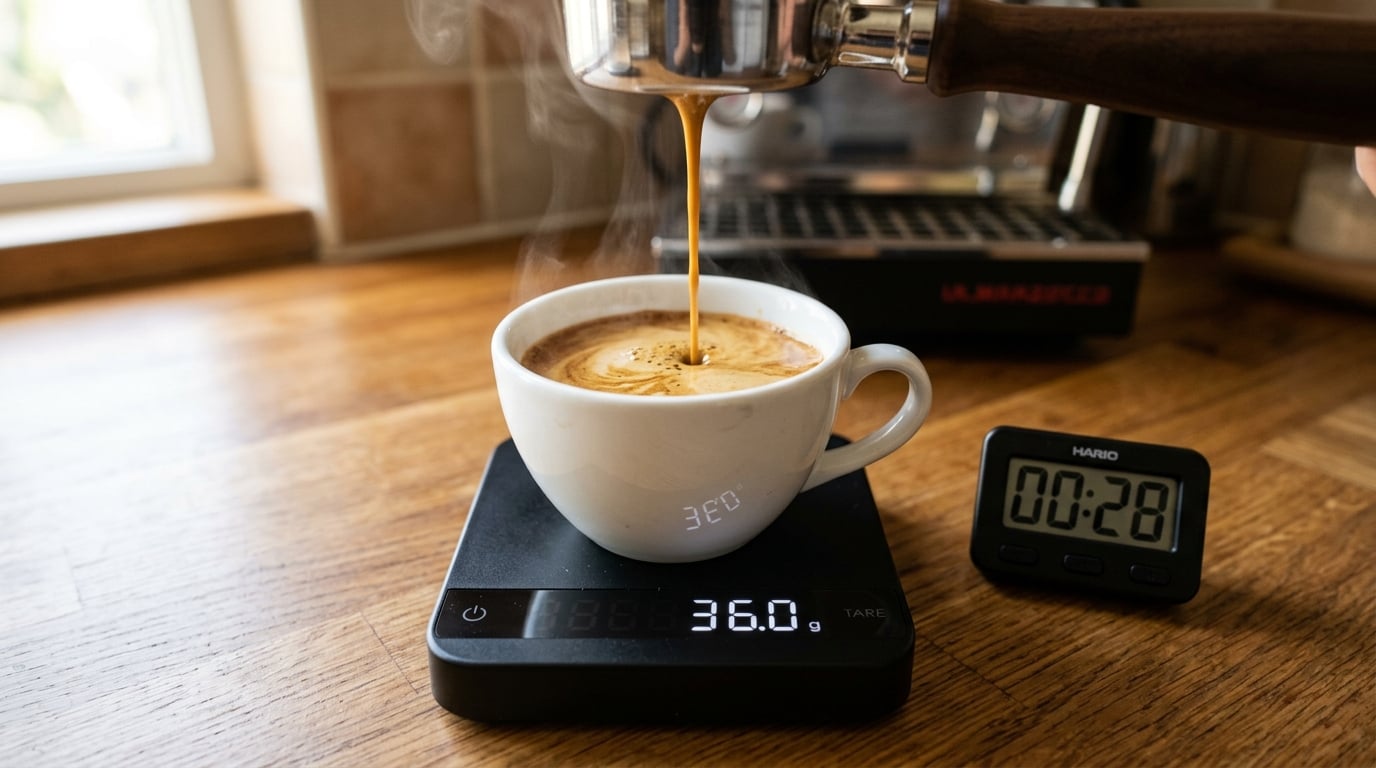
The fix: weigh everything. Any scale with 0.1 g precision gets you going — mine lived on the Breville’s drip tray for years before the Meraki (which has scales built in) arrived. Weigh the dose going in, weigh the shot coming out. The moment I started doing this, my coffee stopped being a lottery.
Mistake 2: Your Coffee Is Too Old
Stale beans are one of the biggest reasons espresso tastes flat and lifeless — and no amount of clever technique rescues them.
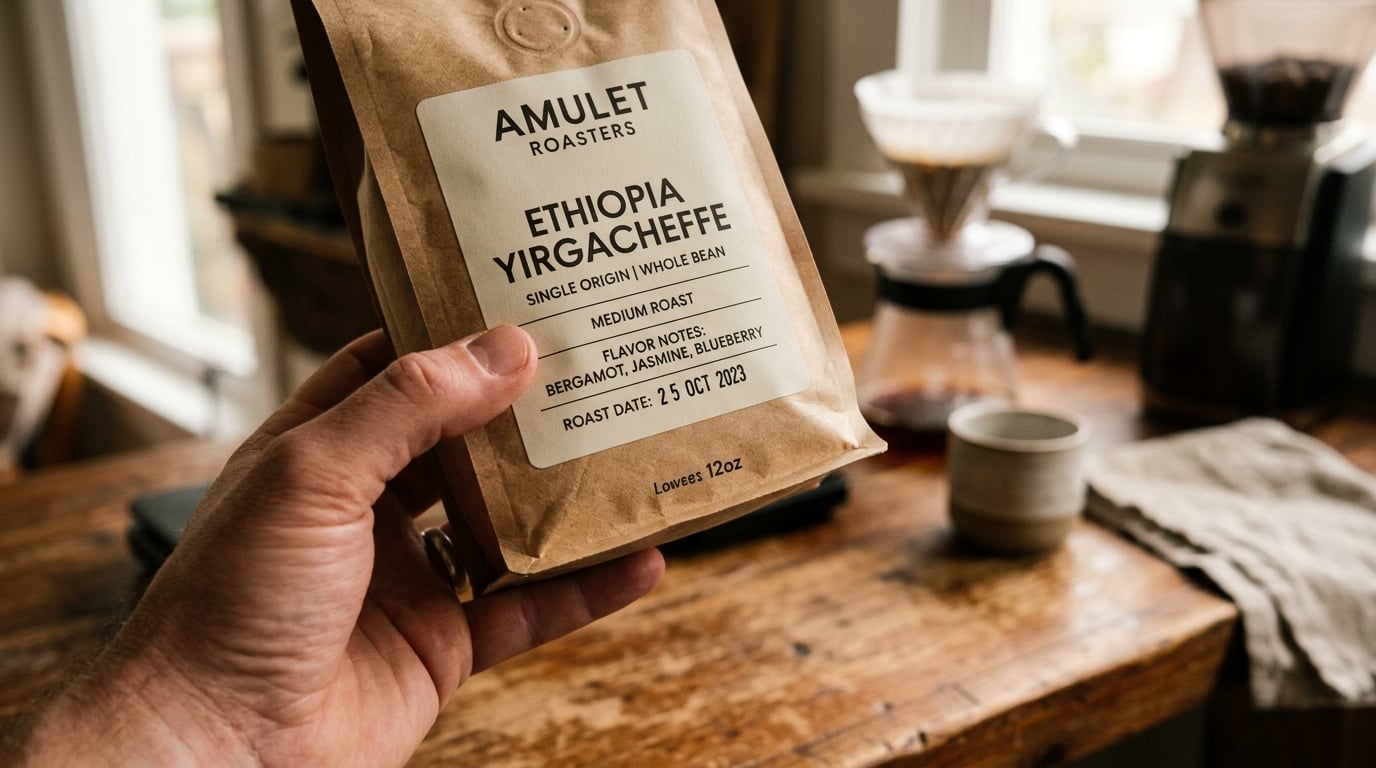
The fix: look for a roast date on the bag, never just an expiry date. For espresso, the sweet spot is roughly 7–30 days off roast. Too fresh and it’s gassy and impossible to dial in; too old and the flavour’s already gone. Buying fresh from a local roaster with a printed roast date changed what was in my cup overnight. (My roaster directory is a good place to start.)
Mistake 3: Your Grind Size Is Off
Espresso needs a fine grind, but “fine” covers a huge range — and the gap between a great shot and a bad one can be one or two clicks on the grinder.
- Too fine: shot runs slow, water gets stuck, tastes bitter and dry
- Too coarse: shot runs fast, water rushes through, tastes sour and thin
The fix: taste the shot before you look at the timer. Sour and fast → go finer. Bitter and slow → go coarser. One adjustment at a time, and write the setting down when you land it. Both my machines have the grinder built in, so this is genuinely just a dial and a taste, over and over, until it clicks.
For the full method, read how to dial in your grinder.
Mistake 4: Your Water Temperature Is Off
This affects espresso more than most people realise. Too hot and you scorch the coffee, dragging out harsh, bitter compounds. Too cool and you under-extract — flat shots with no body.
The fix: brew between 90–96°C. Light roasts sit near the top of that range; dark roasts do better a touch cooler. If your machine lets you adjust temperature, use it — set it, let it stabilise, then pull. Plenty of entry-level machines don’t offer much control here, which is one honest reason a machine upgrade eventually shows up in the cup (it’s part of why I added the Meraki alongside the Breville).
If you’re weighing up an upgrade, here’s my honest take on beginner machines.
Mistake 5: You’re Not Thinking About Your Water
Coffee is 98% water, and espresso is more concentrated than nearly any other brew — so water quality matters even more here. In South Africa that’s a bigger deal than most guides let on, because our tap water swings hugely from town to town. Hard, mineral-heavy water dulls flavour and builds scale inside your machine, which then wrecks temperature stability and pressure, and shortens the machine’s life.
The fix: start with good bottled water — taste a few and pick what works (something clean like Valpré is an easy start). When you’re ready to go further, a filter or remineralising system lets you control the mineral content properly. Cleaner-tasting espresso, longer-lasting machine. I go deeper on this on my water quality page.
The Recap
- Measure dose and yield on every shot
- Use fresh beans — check the roast date
- Match your grind to the shot: taste first, one click at a time
- Control water temperature: 90–96°C
- Use good water from day one
Fix even two or three of these and I promise your espresso will taste like a different drink tomorrow morning. None of it costs much, none of it is hard — it’s just paying attention. That’s the whole secret, and it’s the same one every good café already knows.
FAQ
Why does my espresso taste bad even with a good machine?
Because the machine is rarely the problem. Ratio, bean freshness, grind size, temperature and water quality decide most of the flavour — and all five are in your hands, not the machine’s.
What is the correct espresso ratio for beginners?
18 g of ground coffee in, 36 g of espresso out, in 25–35 seconds. A 1:2 ratio is the standard starting point; adjust to taste from there.
How fresh should coffee beans be for espresso?
Between 7 and 30 days from the roast date. Fresher than a week is gassy and unpredictable; much older and the aromatics are gone.
What temperature should espresso be brewed at?
90–96°C — closer to 96°C for light roasts, slightly cooler for dark. Use your machine’s temperature control if it has one.
Does bottled water really improve espresso in South Africa?
Usually, yes. Our tap water is hard in many areas — it dulls flavour and scales up your boiler. Balanced bottled or filtered water improves taste and protects the machine.
Bibi Burness is the founder of Coffee Journal, a South African specialty coffee community. He’s a self-confessed coffee amateur, learning daily, bean by bean.
About the author
Bibi Burness, founder of Coffee Journal, has profiled 50+ SA specialty roasters and tested 10+ bottled water brands against the SCA standard. He completed the Bean There and Bluebird one-day home-barista courses in 2026 and maintains the site's transparency trust-score system.
Read more on the About page →