Best Espresso Machine for Beginners: What I’d Actually Buy
I own two espresso machines — a Breville Barista Express and a Meraki. Here’s an honest, South African look at which machine a beginner should actually buy, and why the machine matters least.
Key Takeaways
- Let me save you the mistake I very nearly made: buying the prettiest machine I could afford and assuming the coffee would follow.
- My second machine, and the one I reach for when I want to get properly nerdy.
- I don’t own these, so I won’t pretend to.
What I’d Actually Buy (From Someone Who Owns Two)
Let me save you the mistake I very nearly made: buying the prettiest machine I could afford and assuming the coffee would follow. It doesn’t work like that.
Here’s the honest truth after years of pulling shots in my own kitchen — the machine is the least important part of good espresso. The grinder matters more. Your technique matters more. Fresh beans with a roast date matter more. The machine just needs to be consistent, forgiving, and a pleasure to live with every morning. That’s it.
So before you spend a cent, forget budget and looks for a second and answer one question: how much of the process do you actually want to control? That single question — not the price tag — is what should decide your machine. I own two machines that sit at very different points on that scale, and I’ll be straight with you about both, then talk you through a couple of others worth knowing about.
Start Here: How Much Control Do You Want?
| Machine | Best for | The one-line verdict |
|---|---|---|
| Breville Barista Express | Beginners who want to learn | The machine I learned on. Grinder built in. |
| Meraki | Control seekers, one-box setup | Dual boiler, built-in scales, no compromises |
| Sage/Breville Oracle Jet | People who want it all automated | Grinds, doses and tamps for you |
| La Marzocco Linea Mini | The dreamers (me included) | The forever machine. Commercial steam. |
(Quick note for South Africans: Sage and Breville are the same company — Breville sells under the “Sage” badge in some markets. So if you see “Sage Oracle Jet” overseas, that’s the Breville family too.)
Breville Barista Express — The One I Learned On
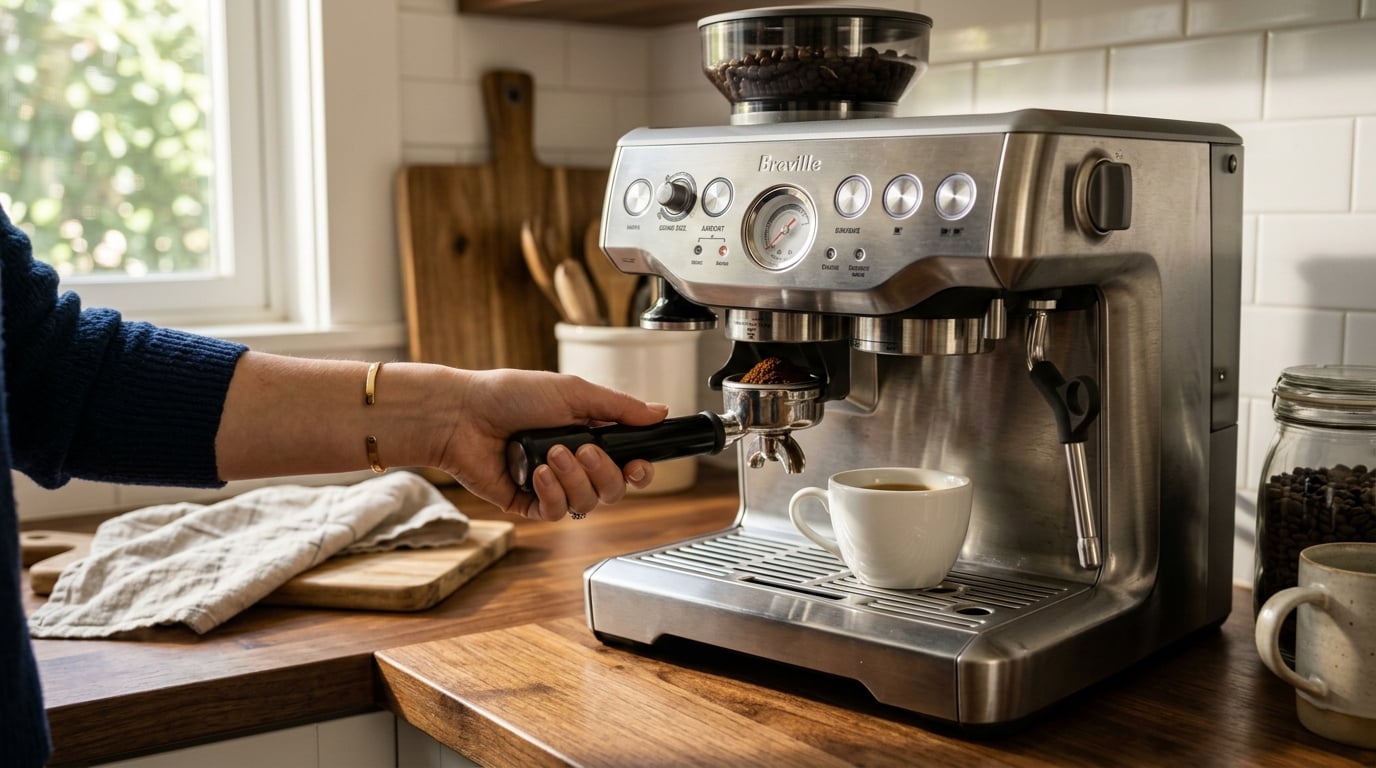
This is the pride of my kitchen counter, and it’s the machine I recommend to almost every beginner in South Africa. Why? Because it has a grinder built right in. For a first machine, that’s everything — you’re not juggling a separate grinder, you’re learning dose, grind and extraction all in one place, on one budget.
It pulls a genuinely good shot once you dial it in, the built-in steam wand will teach you milk texturing (badly at first, then well), and it’s forgiving enough that your early mistakes won’t put you off the hobby. I pulled my first terrible shot on this machine and my first genuinely proud shot on it too.
Is it perfect? No. The built-in grinder is decent rather than exceptional, and you’ll eventually want more temperature control. But for learning, it’s brilliant — and it holds its value well on the local second-hand market if you outgrow it.
Verdict: the best first machine for most South Africans. One box, grinder included, and it teaches you the craft.
Meraki — When You Want The Whole Thing In One Machine
My second machine, and the one I reach for when I want to get properly nerdy. The Meraki is for someone who wants more involvement, not less.
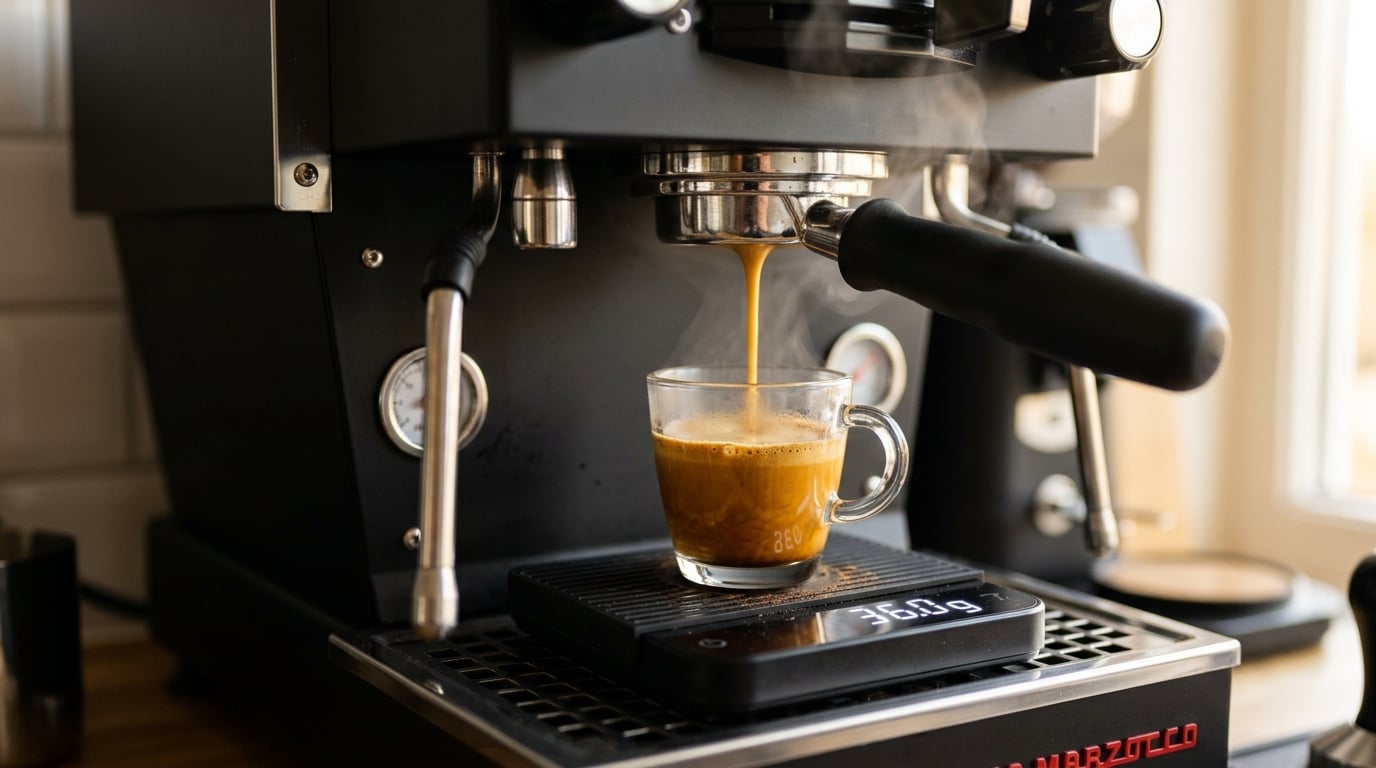
It’s a dual boiler — separate boilers for extraction and steam, so you can pull a shot and steam milk at the same time without waiting. It runs a rotary pump, which is quieter and more stable than the vibratory pumps most home machines use. But the two things that genuinely won me over are the grinder and the scales. The grinder was co-engineered with Timemore — a stepless conical burr tuned for espresso — and there are dual integrated scales that track your grind weight and your shot yield in real time. Precision is built in, not bolted on. It’ll even scan a coffee bag and adjust its settings for that specific bean.
Verdict: the most complete single-machine setup I own — grinder, scales and dual boiler in one footprint. It’s a step up in price and involvement from the Breville, and worth it if you know you’re in this for the long haul.
Two Others Worth Knowing About
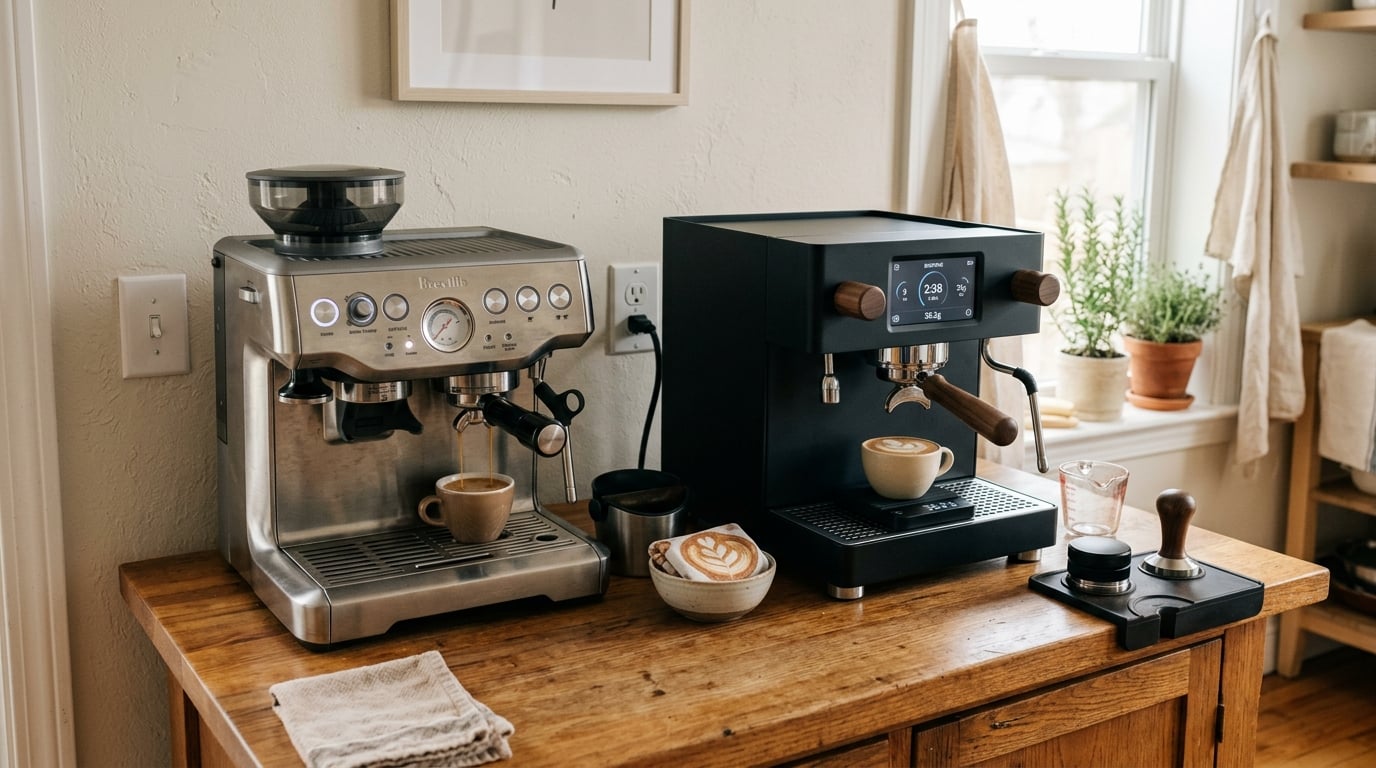
I don’t own these, so I won’t pretend to. But you’ll come across them, so here’s the honest lay of the land.
Sage/Breville Oracle Jet — if you want the machine to do the hard part for you, this is the one. It automatically grinds, doses and tamps into the portafilter, heats in seconds, and even textures milk hands-free. It’s the most beginner-proof machine going. The trade-off is you learn less about the craft, because the machine hides it. If you just want great coffee with minimum fuss, though, it delivers.
La Marzocco Linea Mini — the dream machine. Commercial build, legendary reliability, and steam power in a completely different class to anything else here. It’s the traditionalist’s choice and it’ll outlive all of us. It is also seriously expensive, especially once you factor in the Rand. This is a “buy once, keep forever” machine, not a beginner purchase — but it’s the one I’d put on the counter if money were no object.
One Very South African Thing To Remember
Every machine here needs electricity. Load shedding might be behind us for now, but if you’ve lived here long enough you know the pattern — it goes away, and then it comes back fast. Whatever machine you buy, keep a manual brewer in the cupboard as insurance. I still brew on an AeroPress most weekends, and not because I have to. (More on that in my load shedding coffee guide.)
So Which One Should You Buy?
Honestly, by type:
- Brand new and want to learn the craft → Breville Barista Express
- Want full control in one box → Meraki
- Want it all automated → Sage/Breville Oracle Jet
- Buying the forever machine → La Marzocco Linea Mini
But here’s my real advice, and it’s the same thing I tell everyone who asks me in person: don’t obsess over the machine. Buy something forgiving, spend the rest of your energy on fresh local beans and dialling in your grind, and pull a lot of shots. That’s how you actually get good. The machine is just the thing you learn on — the coffee is what you’re really after.
Start somewhere. Stay curious. Enjoy the shot in your hand this morning.
Want the technique that matters more than any machine? Read the 6 variables that actually make café-quality coffee and how to dial in your grinder. And when you’re ready for beans, start with my directory of South African roasters.
FAQ
Do I need an expensive espresso machine as a beginner?
No. Great espresso comes from the grinder, fresh beans and technique. The machine just needs to be consistent and forgiving. A Breville Barista Express, with its built-in grinder, gets a beginner further than a pricey machine used carelessly.
Why do you recommend the Breville Barista Express first?
Because the grinder is built in. For a first machine that’s the whole game — you learn dose, grind and extraction in one place, on one budget, without buying a separate grinder straight away.
What’s the difference between the Breville and the Meraki?
The Breville is the learner’s machine — simple, forgiving, grinder included. The Meraki is the step up: dual boiler, rotary pump, a proper Timemore grinder and built-in scales that track your shot in real time. More control, more money, more machine.
Is a La Marzocco Linea Mini worth it for home use?
If you value commercial build quality and steam that lasts decades, yes — but it’s a forever machine, not a beginner buy, and it’s a serious spend in Rand. Learn on something forgiving first.
What should I buy before upgrading my machine?
Fresh beans with a roast date, a way to weigh your dose and yield, and good water. Those three improve any machine’s cup more than a new machine will.
Bibi Burness is the founder of Coffee Journal, a South African specialty coffee community. He’s a self-confessed coffee amateur, learning daily, bean by bean.

About the author
Bibi Burness, founder of Coffee Journal, has profiled 50+ SA specialty roasters and tested 10+ bottled water brands against the SCA standard. He completed the Bean There and Bluebird one-day home-barista courses in 2026 and maintains the site's transparency trust-score system.
Read more on the About page →