Café-Quality Coffee at Home: The 6 Things That Actually Matter
Why your home coffee tastes different every morning — and the six variables I control on my Breville and Meraki to get a consistent, café-quality cup.
Key Takeaways
- Making one great cup of coffee at home is easy.
- Most people eyeball the dose and guess the yield.
- Grind is the steering wheel of extraction:
- The sweet spot is 90–96°C — hotter for light roasts, slightly cooler for dark.
The 6 Variables I Actually Control
Making one great cup of coffee at home is easy. Anyone can fluke a brilliant flat white once. Making that same great cup every single morning — that’s the hard part, and it’s the real gap between my kitchen and my favourite café.
Here’s the thing most of us get wrong. Cafés don’t make better coffee because they’ve got fancier machines. They make better coffee because they control every variable, every single brew — the dose, the yield, the grind, the temperature, the water and the freshness. That relentless consistency is what you’re actually tasting when your regular order lands in front of you.
The good news, and I promise you this from my own counter: you can control all six of these at home without commercial gear. I do it on a Breville Barista Express and a Meraki. Here’s exactly where to start.
Why Your Coffee Tastes Different Every Morning
Small drifts add up. Your dose creeps up a gram. Your grinder gets nudged. Your water runs a touch hotter than yesterday. Your beans are two weeks older than the morning you opened the bag. On their own, none of these matter. Together, they completely change the cup — and then you blame the machine.
If you only fix three things after reading this, fix these: grind size, dose and yield, and water. Get those locked down and everything else falls into line.
Variable 1: Dose and Yield
Most people eyeball the dose and guess the yield. That’s exactly why the cup tastes different every morning.
Start with these baselines:
- Espresso: 18 g of ground coffee in, 36 g of liquid out, in 25–35 seconds (a 1:2 ratio)
- Filter / pour-over: 1 g of coffee for every 15 g of water (a 1:15 ratio)
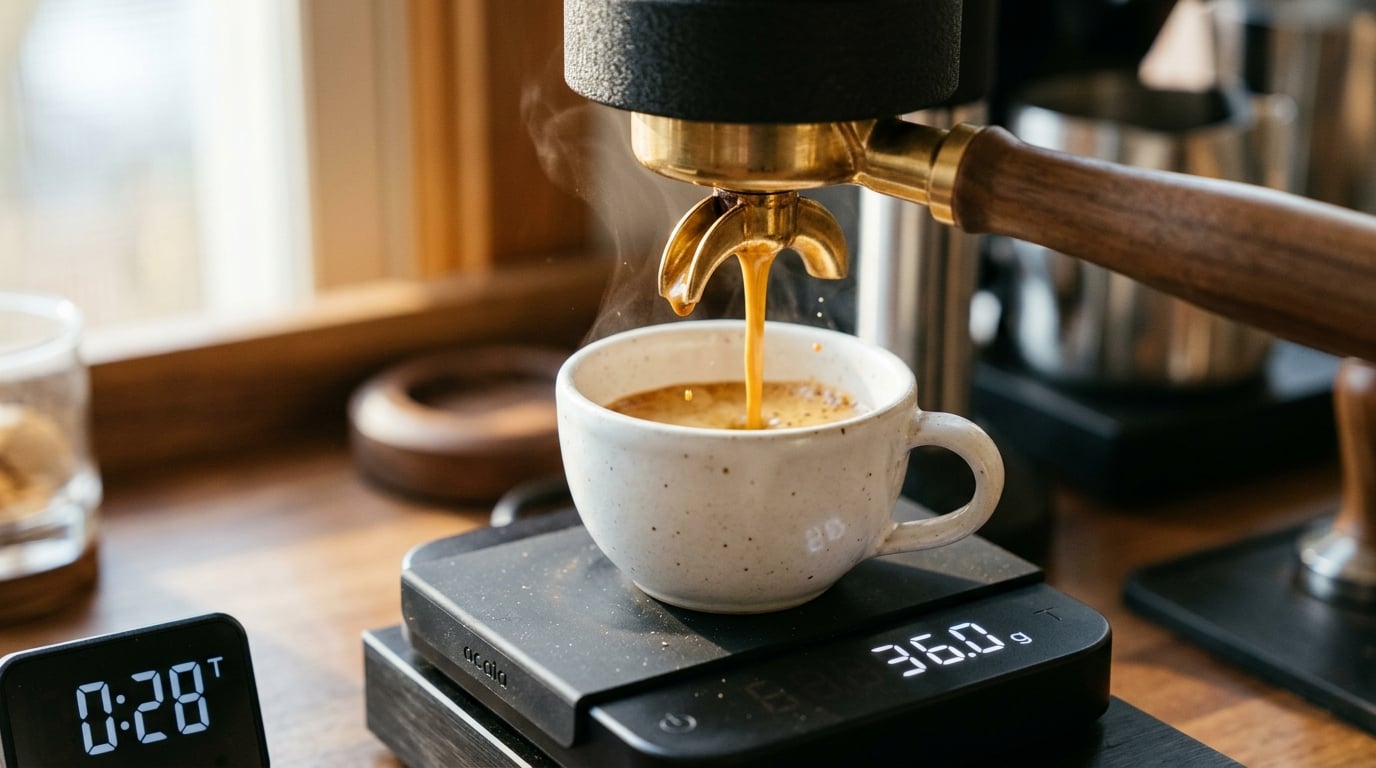
The non-negotiable here is weighing. Weigh your dose in and your yield out, every time. My Meraki has scales built right in, so it tracks the shot for me as it pours — but you absolutely don’t need that. A cheap 0.1 g kitchen scale on the drip tray does the same job on my Breville. The tool matters far less than the habit.
Want somewhere to record it all? Log your dose, yield and grind in the brew journal so every bag starts from a known point.
Variable 2: Grind Size
Grind is the steering wheel of extraction:
- Too fine → water gets stuck → bitter, harsh cup
- Too coarse → water rushes through → weak, sour cup
The rule: always taste before you adjust, and change one thing at a time.
| What you taste | What’s happening | What to do |
|---|---|---|
| Sour, shot runs fast | Under-extracted | Grind finer |
| Bitter, shot runs slow | Over-extracted | Grind coarser |
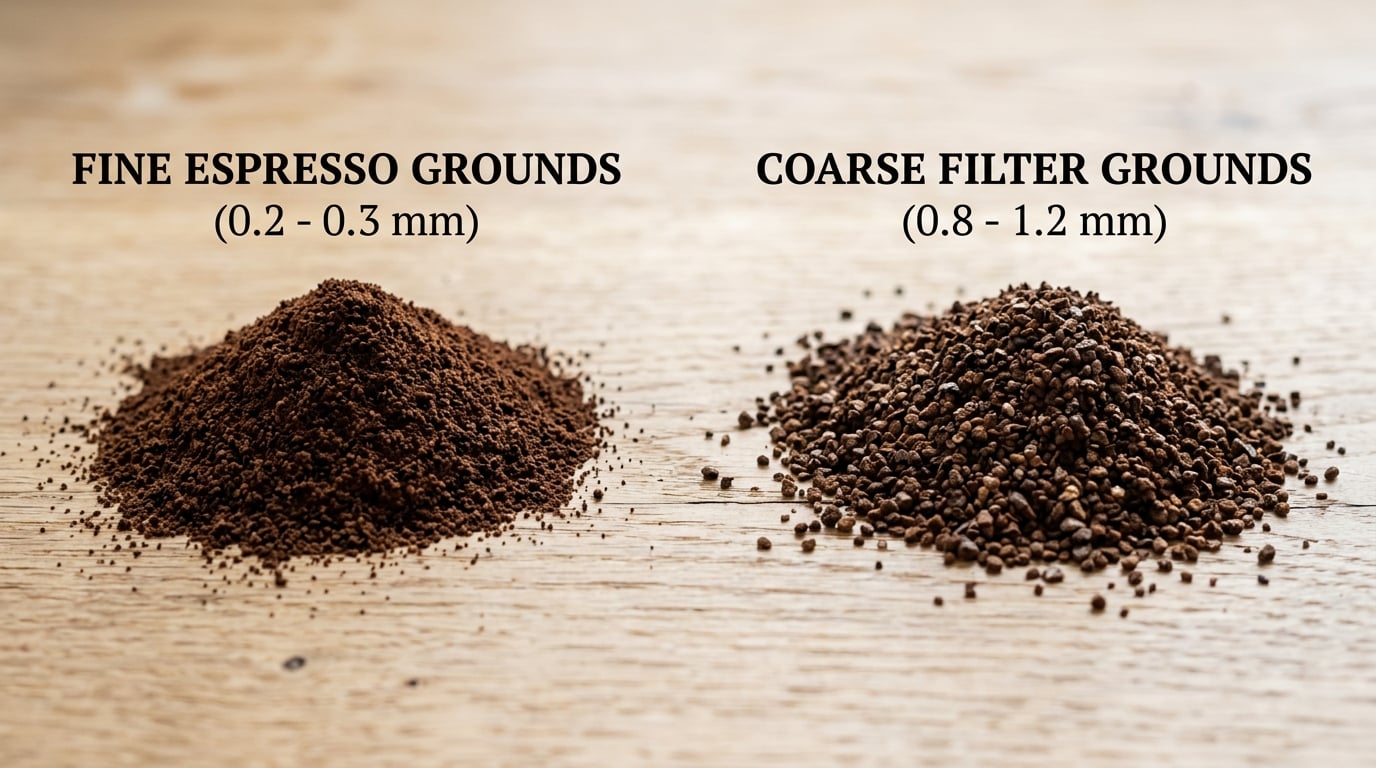
Both my machines have their grinder built in — the Breville’s on the front, the Meraki’s a stepless Timemore burr — so dialling in is just a dial away. When you find the setting that works, write it down. Your future self, half-asleep on a Tuesday, will thank you.
Need a full walkthrough? Here’s how to dial in your grinder.
Variable 3: Water Temperature
The sweet spot is 90–96°C — hotter for light roasts, slightly cooler for dark.
For espresso, most decent machines hold this for you; if yours has adjustable temperature, set it, let it stabilise, then pull. For filter and pour-over, a temperature-controlled gooseneck kettle lets you hit an exact number every time — and it’s one of the cheaper upgrades that makes a visible difference in the cup.
Variable 4: Water Quality
Coffee is roughly 98% water, so this punches way above its weight — and it matters more in South Africa than most guides admit, because our tap water varies wildly from town to town. Hard, mineral-heavy water dulls flavour and quietly builds scale inside your machine, so it’s a double penalty: worse taste now, shorter machine life later.
The easy start is good bottled water — something clean and balanced like Valpré. The next level is a proper filter or remineralising system that lets you control the mineral content. Cleaner cup, longer-lasting machine. I go deeper on the local water situation on my water quality page.
Variable 5: Bean Freshness
Check the roast date, not the expiry date. This one habit will do more for your coffee than most gear upgrades combined.
- Espresso: 7–30 days off roast is the sweet spot
- Filter: 2–4 weeks off roast works best
And here’s the hard truth — stale beans can’t be rescued by anything else on this list. Perfect grind, perfect water, perfect temperature: none of it fixes old coffee. Buy fresh, buy local, buy smaller bags more often. Our roasters print roast dates for a reason — use them. (Start with my directory of South African roasters.)
Variable 6: Temperature After Brewing
This one’s for the filter drinkers. You brew a beautiful pour-over, the first cup is perfect — and by the third it’s gone cold. Reheating burns it; a hot plate stews it.
A simple carafe warmer holds your brew at the right temperature for hours without cooking it. First cup to last cup, same coffee. If you brew for the whole family on a Sunday, it’s worth having.
Where to Start This Morning
Don’t try to fix everything at once — you’ll drive yourself mad. Priority order:
- Weigh your dose and yield — every brew, no exceptions
- Dial in your grind and write it down
- Fix your water — bottled at minimum, filtered ideally
Build it one habit at a time and your coffee gets better every single day. Consistency isn’t glamorous and it won’t win you any latte-art competitions — but it’s the entire game, and it’s the thing that finally closes the gap between your kitchen and your café.
FAQ
Why does my home coffee taste different every day?
Because a variable is drifting — usually dose, grind or water temperature. Cafés lock these down every brew; most of us don’t. Start by weighing your coffee and water.
What’s the ideal espresso recipe for beginners?
18 g in, 36 g out, in 25–35 seconds. Runs fast and tastes sour? Grind finer. Runs slow and tastes bitter? Grind coarser.
Does water really make a difference in South Africa?
More than most people think. Coffee is about 98% water, and our tap water varies hugely by town. Good bottled or filtered water is the single cheapest upgrade you can make.
How long do coffee beans stay fresh?
From the roast date: roughly 7–30 days for espresso, 2–4 weeks for filter. Buy beans with a printed roast date and buy smaller bags more often.
Do I need an expensive machine for café-quality coffee?
No. Consistency beats equipment every time. A Breville with a good grind, a scale and decent water will beat a pricey machine used carelessly. If you’re shopping, here’s my honest take on beginner machines.
Bibi Burness is the founder of Coffee Journal, a South African specialty coffee community. He’s a self-confessed coffee amateur, learning daily, bean by bean.

About the author
Bibi Burness, founder of Coffee Journal, has profiled 50+ SA specialty roasters and tested 10+ bottled water brands against the SCA standard. He completed the Bean There and Bluebird one-day home-barista courses in 2026 and maintains the site's transparency trust-score system.
Read more on the About page →