Coffee Processing Methods: Natural, Honey, Washed & Anaerobic
Washed, natural, honey and anaerobic processing — what each does to your coffee and how it shapes fruit, sweetness, acidity and body.
Key Takeaways
- The oldest method of all, and the simplest in principle.
- Honey processing sits squarely between washed and natural.
- The best way to understand the difference is to taste it: pick a single origin you enjoy and try it across two processes.
Take cherries from a single farm, split them into four batches, and treat each one differently in the days after picking. Roast them all identically. You'll still end up with four coffees that taste startlingly different — one clean and bright, another bursting with fruit, a third sweet and rounded, a fourth wild and funky. That difference is processing, and it's one of the most powerful flavour levers in all of coffee.
What processing actually means
A ripe coffee cherry is built in layers: a skin on the outside, sweet fruit pulp beneath it, a sticky, sugary layer called mucilage clinging to the seed, a papery parchment, and finally the green seed itself. Processing is simply how a producer removes that fruit — and, more importantly, how much of it stays in contact with the seed while it dries, and for how long.
The rule of thumb is this: the more fruit contact, the more fruity, sweet, and fermented the cup; the less fruit contact, the cleaner and brighter it tastes. Hold onto that single idea and all four major methods fall into place.
Washed (Wet) Process
In the washed method, the skin and pulp are stripped off soon after picking, and the seeds are then fermented in water tanks to break down the remaining mucilage before being rinsed completely clean and dried. Because almost all the fruit is removed early, very little flavour is "added" during drying — what you taste is the bean itself.
The result is the cleanest, most transparent cup of the four, with crisp, well-defined acidity and a clarity that lets the coffee's origin and variety shine through. It's the method of choice for showcasing the inherent character of a great single origin. The trade-off is water: washed processing uses a lot of it, which is one reason drier regions often favour other methods.
Natural (Dry) Process
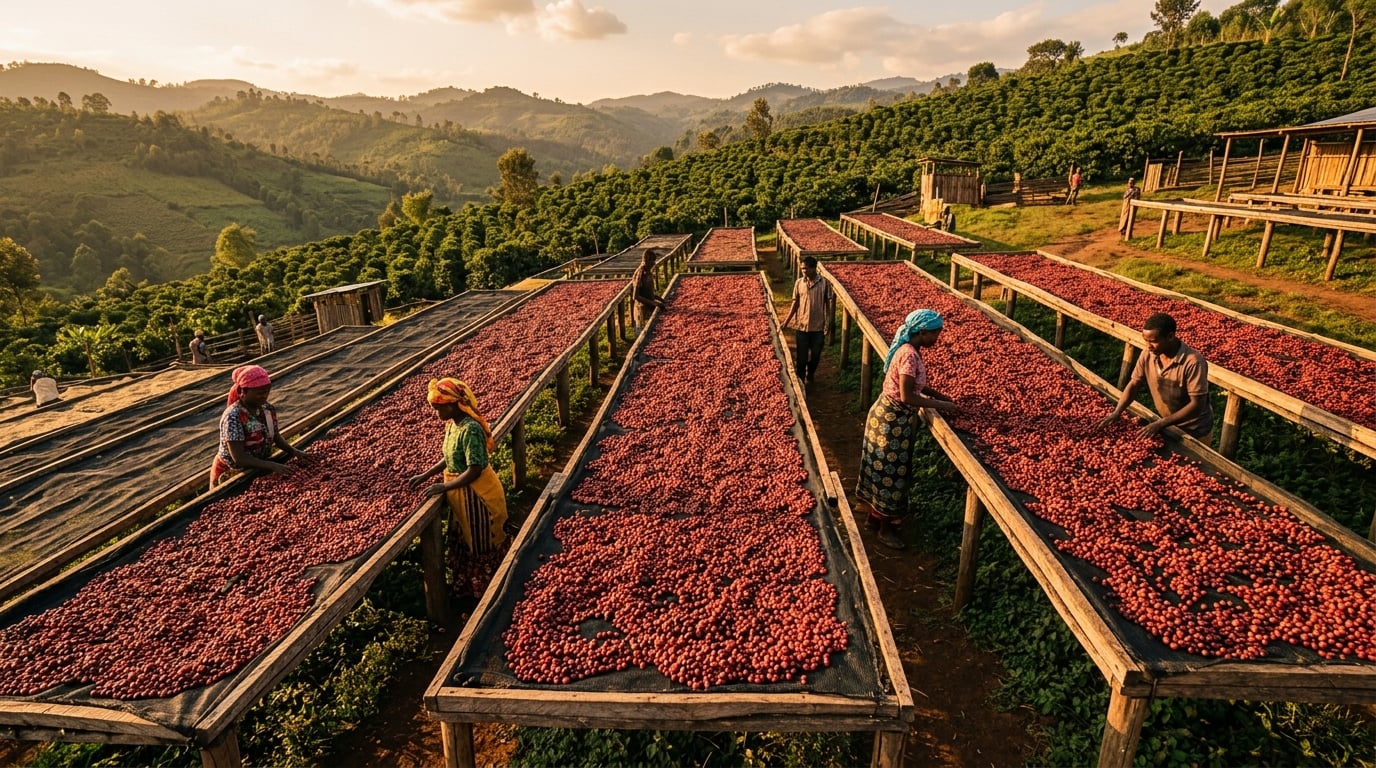
The oldest method of all, and the simplest in principle. The whole cherry is laid out to dry intact — skin, pulp, and all — and only once it's fully dried is the dried fruit hulled away to free the seed. As the cherry dries, its sugars and fruit slowly infuse the bean.
The cup that follows is the boldest of the four: heavy-bodied, intensely fruity and sweet, often with jammy, berry-like, or even slightly boozy, wine-like notes. The catch is risk. Drying a whole cherry evenly takes skill and constant attention, and done carelessly it invites mould and off-flavours — which is precisely why a well-executed natural is so prized.
Honey (Pulped Natural) Process
Honey processing sits squarely between washed and natural. The skin and pulp are removed, but some or all of the sticky mucilage is deliberately left on the seed as it dries. (The "honey" in the name refers to that tacky, sugary mucilage — there's no actual honey involved.)
Producers grade it by how much mucilage they leave on and how the beans are dried, giving rise to white, yellow, red, and black honeys, in roughly increasing order of fruit contact and intensity. The cup is a balancing act: more sweetness and body than a washed coffee, more clarity and rounder, softer acidity than a natural. For many drinkers, it's the best of both worlds.
Anaerobic & Anaerobic Natural
The newest and most experimental of the group. Here the cherries are sealed inside oxygen-free tanks and allowed to ferment under controlled conditions before drying — and when the whole cherry is then dried intact, it's known as an anaerobic natural. Cutting off oxygen changes which microbes drive the fermentation, and gives the producer fine control over the outcome.
The payoff is a cup unlike anything else: intensely aromatic and complex, with pronounced fermented character and unusual, headline-grabbing flavours — think tropical fruit, cinnamon, rum, or boozy sweetness. Because it's so controllable yet so distinctive, anaerobic processing has become the playground of competition coffees and adventurous roasters.
How it shows up in your cup
| Method | Fruit contact during drying | What to expect in the cup |
|---|---|---|
| Washed | Minimal | Clean, clear, bright; balanced acidity; true to origin |
| Honey | Partial | Sweet and rounded; soft acidity; medium body |
| Natural | Maximum (whole cherry) | Intense fruit; heavy body; high sweetness; jammy notes |
| Anaerobic | Controlled fermentation | Complex and funky; strong fermented character; long aftertaste |
Across all four, the markers of a well-processed coffee are the same: clear fruit notes, real sweetness, a complexity that keeps the cup interesting, balanced acidity, and a long, pleasant aftertaste that lingers after you swallow.
There's no "best" processing method — only the one that suits your taste and the coffee in front of you. If you want clarity and brightness, reach for a washed coffee. If you love bold fruit and sweetness, try a natural. If you're somewhere in between, a honey is a safe bet. And if you're feeling adventurous, an anaerobic will surprise you.
The best way to understand the difference is to taste it: pick a single origin you enjoy and try it across two processes. Many of the origins in our Bean There range note their processing method on the label — a small detail that tells you a great deal about what's waiting in the cup.
Read next
- The Journey of a Coffee Bean: From Cherry to Ground — the full ten stages from cherry to grind.
- A Brief History of Coffee Makers: Cezve to AeroPress — eight iconic brewers and the stories behind them.
- Bean There, 2026: The Course That Switched My Coffee Brain On — processing methods in practice, from Bibi's barista course.

About the author
Bibi Burness, founder of Coffee Journal, has profiled 50+ SA specialty roasters and tested 10+ bottled water brands against the SCA standard. He completed the Bean There and Bluebird one-day home-barista courses in 2026 and maintains the site's transparency trust-score system.
Read more on the About page →